
Traditional Coach Lining
Freehand English coach lining is now considered a rare skill that few can do.
Between the years of 1989 and 1999, to get my business established and to get the volume of work done; I constantly worked 100 hours and sometimes 120 hours in a week. During each working week the coach lining work I did was mostly adding the “finishing touch” to the signwriting done on diesel-powered lorries. Throughout a year though a large percentage of my working hours would be spent doing freehand coach lining on a complete range of jobs, from steam traction engines, horseboxes, including coach lining of horse drawn carriages and drays; occasionally Victorian, early Edwardian prams.
I have coach lined the sides of handcrafted luxury cars too, and also much smaller projects, such as coach lining on turn of the century in to the early 1980s, vintage motorbike fuel tanks and panels. Even though most of my coach lining work has been done on commercial vehicles and other forms of transportation; To add that authentic look of a bygone era, I have coach lined the wood panels of shop fronts: This “line” of work is usually done on heritage buildings and working museums.
Traditional Coach
Lining for
- Traction Engines
- Steam Engines
- Locomotives
- Commercial Vehicles
- Narrow Boats
- Horse Drawn Carriages
- Antique Prams
- Vintage & Classic Cars
Some of my recent Coach Lining Projects…

The finishing touch of a freehand coachline
“Painted on a magnificent restoration project done to a 1970s Jaguar XJ6 by Smallman Hall Classic cars, Bridgnorth, Shropshire
Keeping the handcrafted tradition going
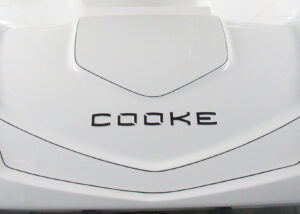
Hand painted coachlines on this new horsebox, built by master coachbuilders, G. Cooke coachbuilders, Crewe, Cheshire
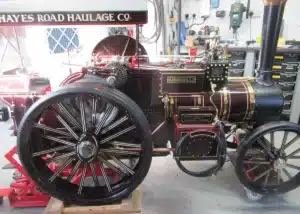
Coach lines on a scale replica of a Burrel steam engine.
This glorious fully working steam engine is a faithful scaled recreation of the traction engines manufactured by Charles Burrell and [...]
The Skill of Coach Lining
I’m Robert Stevenson, a time-served traditional sign writer – below is my background on Coach Lining; for Vintage Vehicles, Traction & Stationary Engines in Staffordshire and The Midlands
When I was a trainee I pestered Vic for weeks to show me how to coach line, “You will never need to know how to run a line, that isn’t done anymore” he said. But Vic, “I have got to line an ERF truck this weekend” So the Friday afternoon before the said weekend he gave me a crash course in coach lining and gave me a liner, and then said “best of luck” What the lining was like I cannot remember but it must have been ok as there was no complaint and I got paid.


< Mike Priestner's 1917 Steam Engine - Lymm, Cheshire
Believing that I could master the control of a lining brush though in a few hours or even a few weeks was ludicrous as this with the many other brush skills that a signwriter has to master cannot be achieved without years of dedication, commitment and experience. When fine line tape became available many signwriters quickly started to use the easier alternative of using two strips of tape and painting in the centre to create the line; the tape is then pulled off and the corners painted in with a lettering brush.
Fine lining tape was already available when I started signwriting, but because I wanted to master the secret skill of running a coachline freehand I would not use this; neither would I use the vintage alternative, American designed and patented Beugler pinstriper. So, I persevered with a paint charged coach lining brush, and practised until I achieved my ambition of been able to run a coachline by hand.
Currently I offer Coach Lining for Steam Traction Engines, Vintage Vehicles, including Trucks, Lorries & General Commercials – I’m based in Staffordshire and currently cover the Midlands and further afield when required.